I love nothing more than family and my sweet dogs.
So when I see them suffering, I hate it.
Most nights sometime between 11:00 pm and 4:00 am…
in New Mexico, my Mom wakes up wondering where she is
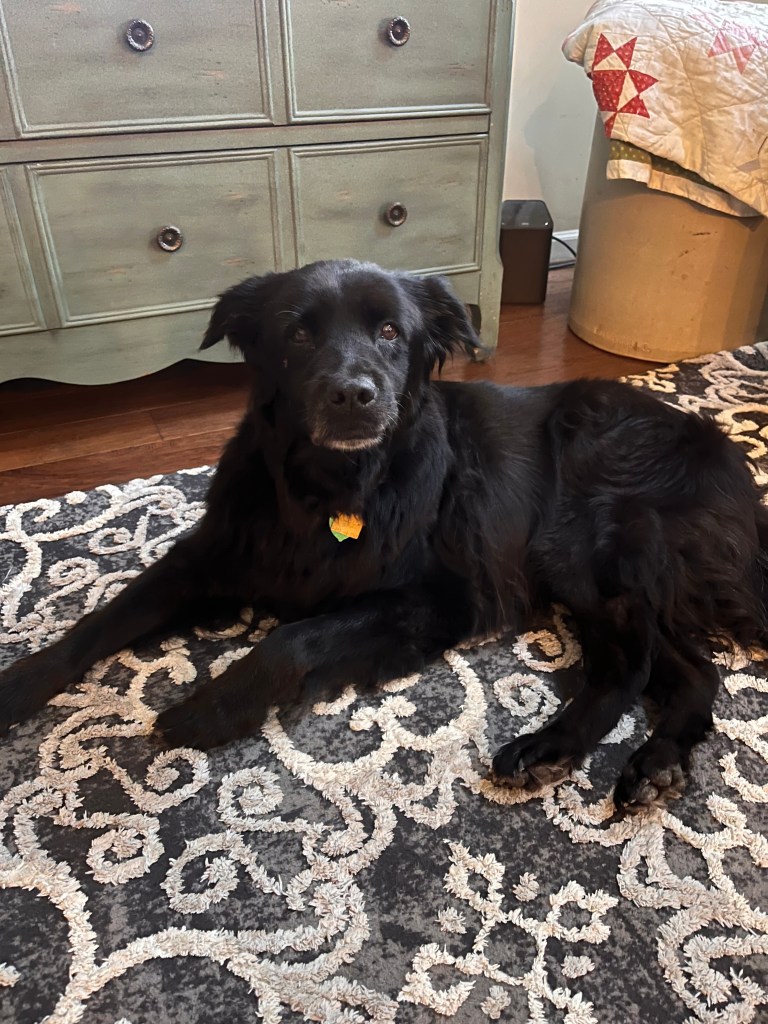
in Georgia, our dog Sancha wanders around, barks and barks, veterinarians call it the midnight stroll
in NM, Mom awakens, ready for pancakes.
in GA, Sancha wakes up hungry for canned food
in NM, exhausted from trying to make sense of the world, Mom takes naps during the day
in GA, exhausted from trying to make four legs work as a team, Sancha sleeps most of the day
in NM, Mom wants to go “home,” remembering so much of the past and none of today
in GA, Sancha wanders from room to room looking for a place to rest
Then the day comes, and the New Mexico sun rises over the mountains…
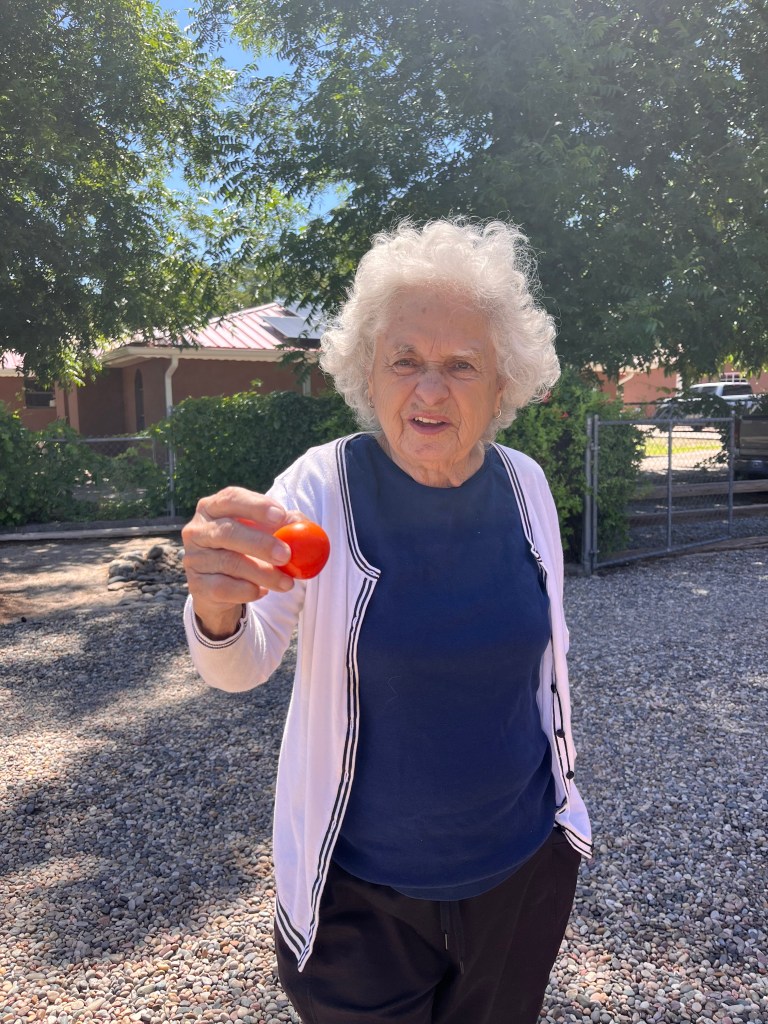
This is when Mom walks around the yard checking the plants and trees, always stopping to smell the roses (She’ll make sure you smell them too).
she remembers where the tomatoes are planted and drenches them in water like a baptism
she remembers that the newspaper lies somewhere between the sidewalk and the lavender plant
and where to find the Cheerios. Honey Nut. Not Plain.
she is not sure if she already ate, but knows when she’s hungry.
In Georgia, the warm day begins and…
Sancha sniffs and lingers by her favorite bushes on walks
and still rolls in the grass when her face itches.
she remembers to step a little higher when there is a curb
and rests her head on anyone’s lap next to her
All of this made me think about a recent book I read..
In A Man Called Ove, author Fredrik Backman writes,
“And time is a curious thing. Most of us only live for the time that lies right ahead of us. A few days, weeks, years. One of the most painful moments in a person’s life probably comes with the insight that an age has been reached when there is more to look back on than ahead. And when time no longer lies ahead of one, other things have to be lived for. Memories, perhaps.”
This is what I learned:
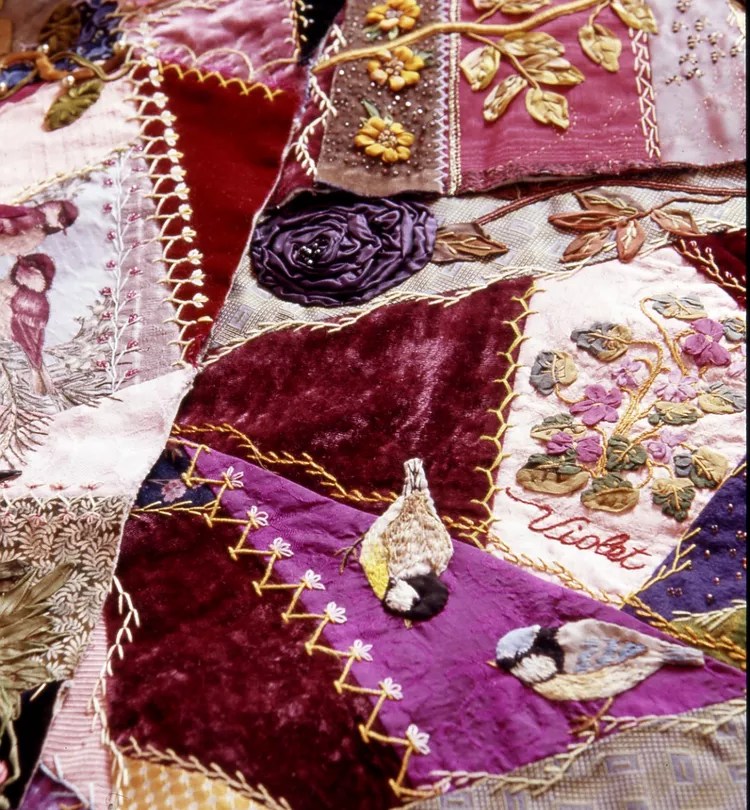
Dementia is an agonizing thing. Memories are pieced together like a crazy quilt. Each one irregular in shape and size, stitched together with needle and thread. Each scrap of material a memory of childhood or maybe yesterday. Raveling begins a little each day as stories are stolen. On the periphery of their minds, we care for them and gather the fallen pieces with fury, hoping maybe tomorrow will be better, yet it’s not. It never is. And so it goes. This life, robbed of its past and one moment to the next.
We know the time is coming for Sancha. We are there.
“What color is this?” my 90-year-old Dad asked, sitting on the edge of a plastic chair, pulling out a round, black tin with the words “KIWI” written across the top.
“Black,” I said. He placed it carefully in the box and pulled out another
“This one?”
“Black.”
“This one?”
“Black.”
“Dad gummit! I need brown. I can’t see these.” Dad’s macular degeneration is causing a slow decline of his vision. “The doctor said I’d lose 75% of my vision. But that’s okay. We can do this.” He said it like we were all looking through his eyes, only seeing the small disk of polish with blurry words on top.
I reached into the old shoe-shine kit, outfitted with a horsehair brush, several circular tins of polish, and a neatly folded rag.
“Here, Dad. I know this is brown. I remember getting it at a yard sale for you.”
He chuckled and smiled. “A yard sale.” He echoed my words and sounded like he was remembering an old friend.
Dad loves yard sales, going to them, holding them, talking about them. When Mom and Dad were younger, they would hit up the “Free piles” at sales. Broken chairs, old trunks, tables, and unfinished quilts were saved and given new lives. Together, they would repair, upholster, stain, paint, stitch, and clean each item, readying them for their new owners. Then every summer we would have a family yard sale. He loved visiting and bargaining with people, sometimes being jokey and saying things like, “$4.00? That’s way to much to pay us, how about $2?”
Dad reached in the dark, stained wooden shoe shine box, and pulled out a small bottle of liquid shoe shine.
“What color?” He asked.
“Black. Would you like me to do the soles?”
“Sure.” He said. He sighed, rubbing the polish on the brown leather shoes. “When I shined shoes in Barrelas (his childhood neighborhood), I charged 15¢. Yup, 15¢ and a few times customers gave me a quarter, and for change, I didn’t have change!”
“Well, what did you do?” I asked.
“I ran!!” Then I’d hear, “I’m going to tell your dad!” The words trailing off in the distance.
Dad squeezed and globbed the brown liquid on the shoes and it dripped on the patio floor. “How does it look?”
“Like new!” I said. pulling the red, vintage brush from the box and buffing one shoe at a time.
“I used to love polishing my shoes. Still do actually.”
What I Learned:
Listen to their stories. Objects jog our memories, and stories hold us all together. Remember to take pride in your shoes and keep them shiny.
As I spend time with my parents, I have tried to focus on what they can do, can remember, and can impart.
So, I’ve jotted a few simple, timeless lessons:
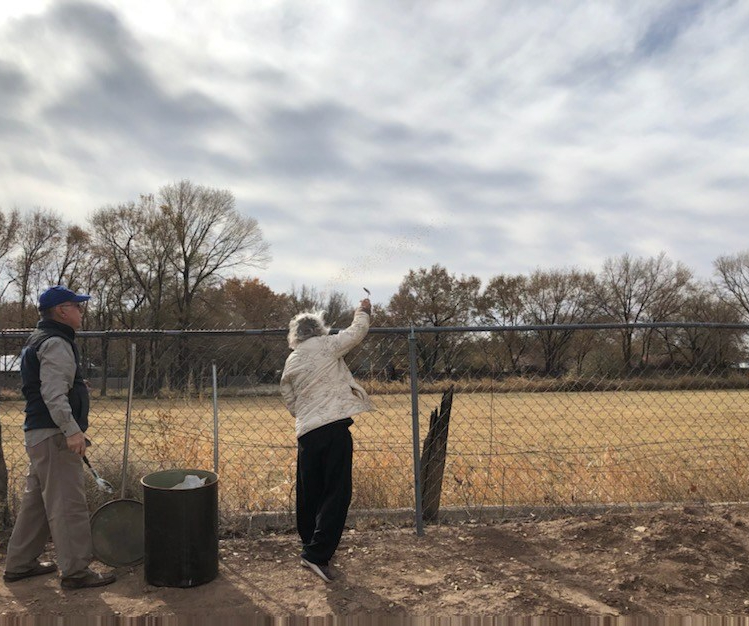
Mom: Feed the birds.
Dad: After everyone puts their dishes in the dishwasher, rearrange them because they did it wrong.
Mom: Always wear an apron when cooking.
Dad: Keep moving, there is always something to do.
Mom: No laundry on Sunday.
Dad: Make sure you have enough wood for the winter.
Mom: Make photo albums.
Dad: Call friends to check on them, before they are in the obit section of the paper.
Mom: Fold sheets as you take them off the clothesline.
Dad: Clean and put your tools away after every use.
Mom: Get an education…no one can take it away from you.
Dad: Fix things yourself, at least try.
Mom: Arrive early to church.
Dad: Start shaving when it’s time to leave for church.
Mom: Talk to your plants, they’ll listen.
Dad: Throw seeds anywhere; if they want to grow, they will.
What I learned:
Change is inevitable.
Each time I come to see Mom and Dad, they wake up a little later, move a little slower, and forget a little more. But there are those moments when I feel like Mom knows I’m her youngest daughter and just maybe remembers all of the piano lessons she drove me to, the tortillas we made together, or the nights she stayed up helping me type school papers.
Then there were the yards of fabric we cut to make dresses with ruffles, duffle bags with multiple zippers, terry cloth shorts with edging, and blouses with horrifying button holes.
Maybe they both remember galavanting around Mexico City, or visiting me in DC when I thought I was cool and business-like, or walking me down the aisle and helping me figure out how to be a mom. “Babies need a schedule,” Mom said. So I wrote it all down, timed naps and meals, and couldn’t imagine not having a system.
As always, I’ll hold on to the lessons and the moments with them forever.
I was walking with bright eyed, Claire today, golden curls falling in her face, cheeks flush from playing outside. We passed by the garden and she picked anything green and gave it a trial taste. “Mmm, mint!” She shrieked. We then both tried a very bitter lettuce and and immediately spit it out, moving on. She ripped a few of the chicory-type lettuce into small pieces and carefully placed them inside the “bowl” of a bright red tulip. It looked like a pricey salad at a steakhouse served inside the delicate petals.
Looking very satisfied with her garden art, she exhaled and said, “Pretty”.
As we walked back to the playground, she passed a small white painted rock with pink swirls on top amid the tulips. “I really like this rock.” She said cradling it like a small kitten. “It’s so pretty”.
“It sure is.” I said hastily trying to keep her moving to our destination.
“Time to go” I said.
“One sec.” she said. I really want this rock.”
“Well…” I told her someone placed it in that special spot and would be back looking for it. “And just in case, we should leave it right where it was.”
With a lot of hesitation, she tiptoed back and she set it in the soil.
Not even five steps away from that small stone and she stopped abruptly.
“Wait!” She looked at me and then up at the sky.
“Señora Lucretia! It was God!”
She quickly walked back to the rock like a long-time friend, picked it up and said,
“God sent this rock down for me and my sister to share! I HAVE to take this rock! It’s the sister rock!!!!”
“God?” I questioned.
“Oh ya, it was God. He wants us to have it. The Claire sisters.”
I jumped in…
“Well, it was probably God, that sent it, but maybe we should leave it here and check on it tomorrow.”
She turned around, rock in hand, and gave it a toss back into the tulip patch.
She walked a little further, running her hand over a patch of reeds.
“Señora, it wasn’t God.” She confessed.
I nodded. “Not God?”
“It was Santa. He left the rock.”
“Santa?”
Riveted, I asked if they knew each other, these two rock delivery guys…God and Santa.
“Yes! God and Santa DO know each other!” She was out of breath from the utter excitement of talking about God and Santa at the same time…something reserved exclusively for December.
“They like to pick leaves together.” She said.
She went on, “But they really like to go fishing together.”
“That sounds nice.” I said.
Our walk continued and we eventually made it to the playground, which to imaginative, joyful and creative minds like Claires, isn’t just a playground, it is a palette for pure magic.
What I learned:
Walk with anyone under five. At their pace. Look high, look low, look outside and most importantly, look inside your heart and listen to their magical words.
In pursuit of a pen, I reached into the junk drawer (grumbled about cleaning it out) and picked up a mechanical pencil with no top, wrapped in tape, and the cylinder was empty. Harper, our 8-year-old neighbor, was over and said, “Why does the pencil look like that?” I held up the plastic pencil remains, fiddling with them in my hands, and said, “Well, when my son lived here, he would recycle these and use them for projects he would build.”
Whoa…Past tense. “…when my son lived here …” I heard it.
Then I felt it. My heart did that sinking thing when it secretly knows the past is, well, past…and life within the walls of our home will never be the same.
That was then…
I thought back to when the kids were little. We’d set up obstacle courses in the backyard with logs to balance on, hula hoops to maneuver through, and barriers to tackle. My husband managed the stopwatch, narrating along the way, and I held the video camera–because in my mind documenting meant the moment wouldn’t (couldn’t) go away.
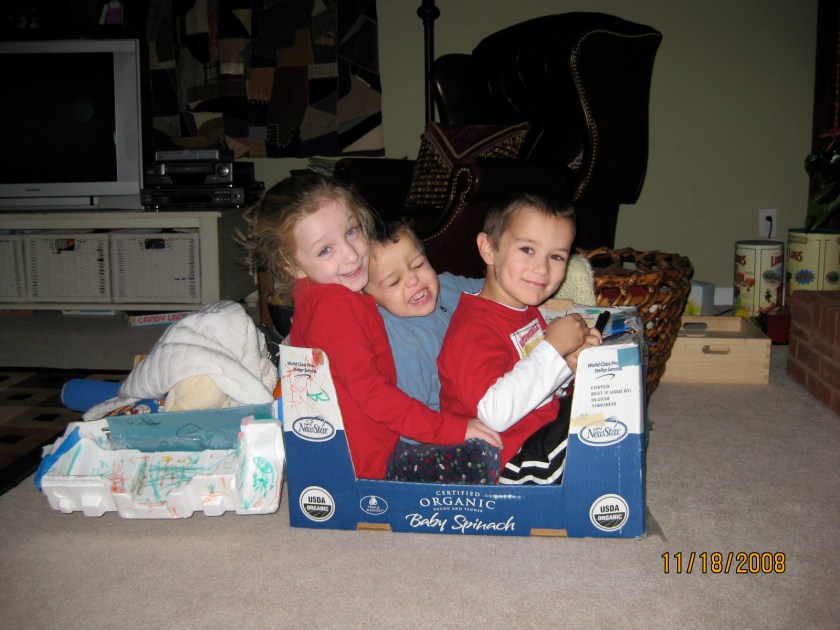
Our oldest son would go first, his eyes planning the most efficient, logical, and fastest path, no ladder too tall, no tunnel too narrow, no risk too great. Our youngest son would follow, arms flailing, adding cartwheels, leaps, and spins along his path to ensure the most fun could be had on the journey. Finally, our daughter, the oldest, would lean out of the screen door, Harry Potter book in hand, “What’s the fastest time?” she’d ask while slipping on any shoes that were handy and pushing her curls away from her face with the back of her hand the way she does. She’d quickly survey the course, hustle to the starting line next to her brothers, and yell, “READY Papa!” Up, over, in, and out, she dashed through the course with her signature audible breathing, making it clear she was working to win. Once she held the new record, the screen door closed with a bang, book, glasses, and our current winner once inside again. The boys would then clamor to surpass her time, and the cycle continued.
I play the kids’ childhood moments in my mind’s Viewfinder all the time–clicking through the first days of school, family trips, awards won, races lost. I think about who leaves toothpaste in the sink, who can tolerate “all that crunching,” and who will empty the top rack of the dishwasher. One common thread – as if running the backyard course, they have all become unstoppable-each blazing their own trail, no matter the obstacles.
This is now…
We had our kids 15 and 18 months apart. Total 3. So…in the last two years, we’ve had two high school graduates and in 2024, our youngest will flip his tassel as we say farewell to all of the high school pomp and circumstance.
And as quickly as they graced our every single day for 18 years, off they go.
As our first two started their journeys outside the context of our family, it was beyond hard. But all I could picture was our unstoppable daughter out in the world discussing the current issues and immigration policies with peers, laughing heartily at her friends’ jokes, and making Spotify song lists with her new people.
She is right where she needs to be. But boy do I miss her.
Then our oldest son, who always came out to greet us, carry in the groceries, and asked SO MANY “Can I?” questions – the stamina of a cheetah, he never tired of hearing, “No.” He’s the guy to call when the car won’t start, the path needs clearing or the couch won’t fit through the awkward doorway. He follows Mark Twain’s words, “ I have never let my schooling interfere with my education.”
He, too, is right where he needs to be. But boy, do I miss him.
Our youngest is our mainstay. The traditionalist. He knows where the holes are in the wall to hang the birthday banner draping the kitchen window five times a year, where the angel food cake pan is kept (and how to use it), and is always clad in workout clothes as if a “sporting” emergency could spring up anytime, he’s the kid that will be there on your happiest or loneliest day and come loaded with snacks and goofy jokes.
Soon, he’ll pack up, and our nest will be very empty
Boy, I’m going to miss that nest.
What I’ve learned:
Back in August, when packing up the kids for college, I stopped and really listened to the sounds of our morning. I held onto them with clenched fists because somehow through the cacophony of yells and stomps, blenders and constantly running water came the harmony of our home. But eventually, even the best of bands have artists who seek standalone stardom. Simon split from Garfunkel and still performs today with a little less hair and a lot of notoriety. So as they should, our family paths have split. I struggle to marvel at the space between us because letting go is really, really hard. Thankfully we have our stories, love, and of course, Facetime.
Thanks for joining me,
Lucretia
“It is not what you do for your children, but what you have taught them to do for themselves that will make them successful human beings.”
Our kids are all facing decisions right now. Jobs after college, law schools, distant travel teams.
Big 20-something choices – the kind of decisions that will lead them to the country or city, a job they love or one with financial security; exposure to a new area in the country or not.
Each choice will shape their experiences, who they are, and who we will become.
Thinking back, when the kids were younger, I decided on the small stuff – Pampers or Costco brand diapers, mashed peas or sweet potatoes for lunch—Naptime books: Good Night Moon or Bears on Wheels.
As they got older, each would choose two books before bed to read. Every night. Before school, they matched their plaid shorts with striped t-shirts, and none were the wiser. It was THEIR choice. They were at the helm of the small choices as the drawers squeaked open and closed.
Then we moved to the either-or choices: library or bookstore, playground or zoo? School lunch or make your own. (They always made their own) Each choice given to them to hold and handle.
Bigger kids = bigger choices
Soccer or mountain biking? AP or Honors? Clarinet or cello? Baseball or lacrosse? All theirs to make.
Older kids = life choices = THEIR CHOICES
What I learned:
Hard choices are real choices. The reasons we make them define who we are, and where our agency lies.
We can make choices because we know what we care about, what matters to us, and how we will interact in the world with the decision.
Lucretia
In the space of hard choices we have the power to create reasons for ourselves to become the distinctive people that we are. And that’s why hard choices are not a curse, but a godsend. – Ruth Chang, Philosopher
“Oh, gosh, do you cry every time you leave?” I asked my sister as she fastened her seatbelt, blinking her watery, tired eyes. “Some days,” she replied, glancing at her phone, ready to make a call on her way home to help someone with something; it didn’t matter who or what—if she said she’d help, she would. I waved goodbye and said a prayer, hoping she’d get a little rest.
I was on. Mom walked outside with a Dove Bar in hand, and in the distance, I heard the rumble of the wood splitter starting. There’s nothing like seeing your legally blind 90-year-old dad operate a motorized, hardened steel blade by himself. I shifted Mom over so I wouldn’t lose focus on either of them. Then Mom suddenly went into nurturing mode and said, “I’ll get you gloves.” Dad and I began splitting wood into smaller, more manageable sizes that he could carry. After the first wheelbarrow full, I didn’t see Mom return, so I said, “Let’s finish tomorrow.” “We still have all of this,” Dad said, sweeping his arm toward the rest of the woodpile, and kept working as if tomorrow depended on it. I looked up briefly and saw Mom approaching, cradling gloves and a hat.
“I can’t believe I found them so fast,” she said proudly, handing them to me like a treasure she discovered only to share with her daughter. I slipped the two right-handed gloves on and secured the bucket hat on my head. “You have to protect yourself when you help Dad with this. Go slowly and don’t rush.” I thought about how Dad rushes as if there’s a wood-splitting deadline he’s barely going to meet, while Mom works methodically, pacing herself like the metronome on the piano—measured, steady, calm. We finished up, and I mentally prepared for Mom’s sundowning—the dreadful circadian rhythm disruption when her confusion becomes overwhelming for all of us.
Before dinner, our dear neighbors stopped by with a plate of freshly made Biscochitos, a small piece of plastic wrap revealing cinnamon-sugar-coated cookies. I thought about how these are the allies we need in our lives. Neighbors like this sweet couple, who built a gate between their home and Mom and Dad’s to make it easier to help, visit, or deliver cookies.
At 1:20 a.m., the sundowning occurred.
“This is not my home. I’d know if I had a daughter. How did I get here?”
I texted my sisters: How do I get Mom to transition from her reality to today?
The three dots on my phone pulsed like a heartbeat: “Try to agree with her and accept as much as possible. Try music and singing, and if she’s up, give her a pancake. Walk her around the house.”
When Mom is in this altered reality, she clocks in at about 3,000 horsepower, a 4-foot-10-inch force.
As the text from my sister rolled in, I felt like she was sending answers to the SAT so I could ace the test: “Food usually calms her down. Try changing the subject or asking her questions like, have you milked a cow…”
There it was. Two pancakes later, and a detailed explanation of how she would spray milk directly into her mouth while milking, Mom was back. “You want fresh milk? THAT’S fresh milk,” she said emphatically.
54 minutes later, and we’re back in bed.
What I learned:
Daughtering is a verb.
The focus toggles between loving and languishing, admiring and administrating, memories and management.
While I need to remember to ensure Mom and Dad are hydrated, medicated, and rested, all must be connected to care and non-operational love.
This Friday, I will be home with my parents. I thought I’d repost a story I wrote a few years ago… the changes they’ve gone through, mentally, physically, and emotionally, over the years are evident. Still, they are eternally guided by faith, hope, love, and my super supportive sisters.
Repost from 2023 Lenten Reflections #4
I am one of four sisters. The youngest and farthest from our parents. Growing up, people would refer to me as “the baby,” and mom would swoop in like an eagle – wings flapping and correct them in her unyielding tone, “Nooooo, she’s the youngest”. At the time, mom was busy raising four independent girls, and the term “baby” was reserved solely for those in diapers, which we were all out of by age two.
As in most families, we each had our textbook roles as siblings: the oldest – reliable and overly cautious (as kids we barely glimpsed at the Grand Canyon as she herded us like a Border Collie away from the edge), the middle sisters – a tad rebellious, with large social circles (probably helped that they had a cool 1957 Ford truck to drive), and me fun-loving and easy-going perhaps a bit lazy. Now that Mom and Dad are 84 and 87, respectively, (AMAZING! I KNOW!) life has changed a bit, and we have adjusted our roles.
That being said, when it came to caring for them as they waltzed hand in hand through their later years, I was not the daughter to step up to the helm and guide the ship. There’s something called “Seagull Syndrome,” where the sibling who lives the farthest away tends to visit, poop on everyone’s ideas about caretaking, and fly home. I try not to do that but rather be the “fun uncle” type daughter who says yes to everything (“Yes, cookies for breakfast counts…yes, we can binge watch Blue Bloods until midnight”) , and then I head home.
Thankfully, with three sisters and the Catholic faith as our north star, one of my sisters retired from her job and moved back home to care for them. With a Master’s Degree in psychology, 30 years of experience managing engineers, and a heart of gold, she was clearly qualified and has made what is possibly the noblest of all jobs look easy. She’s the Helen Keller of caretaking. She knows where mom hurts and how to heal, she knows when dad needs to go for a drive or use the wood splitter, and she knows exactly when they both need a nap. Although they both say they “don’t nap”.
As a bunch (think Brady’s with attitude), we each contribute what we can. My oldest sister is always on call and will drop anything to be present. Outsourcing as needed, and sending Pedialyte, Boost, or whatever is needed via Amazon. My sister, closest to me in age, will jump in and clean, manage all outside work, call daily, and do more between 10 pm and 2 am than most people do all day. We all have our jobs, whether it’s calling to tell them stories of our day, making sure mom takes her medicine, or dad sits down to rest. But my sister, the primary caretaker, has developed a skillful management of herself and our parents, and for that, we are all grateful.
How does she do it?
Always reading and learning, she finds the perfect balance between caretaking and respecting our parents’ need for independence. In the book Being Mortal, author Atul Gawande posits that whether a teen or a senior, they both value autonomy and crave the feeling of purpose and worth every day. So, when Dad, who recently stopped driving, wants to drive the truck from the front yard to the back, we let him buckle up and go…better to help him remember he still can, even if just a little bit.
Equally, when mom wants to give the next-door dog, Ned, leftovers through the fence (even though he’s been fed), she takes care of dear old Ned. I read a story about Bill Thomas, director of a nursing home in NY, who brought in pets for the residents to nurture because he says giving people something to care for makes them more active and alert. Thus, my parents’ surplus of suet, bird seed, dog bones, and corn.
Being part of the “Silent Generation,” our parents are workers. Raised in the Depression Era, everything is recycled, reused, repurposed, and appreciated. Growing up, wood piles were (and still are) precious commodities, prom dresses were made by mom (!), and going out to eat at “The Royal Fork” Buffet was a really big deal.
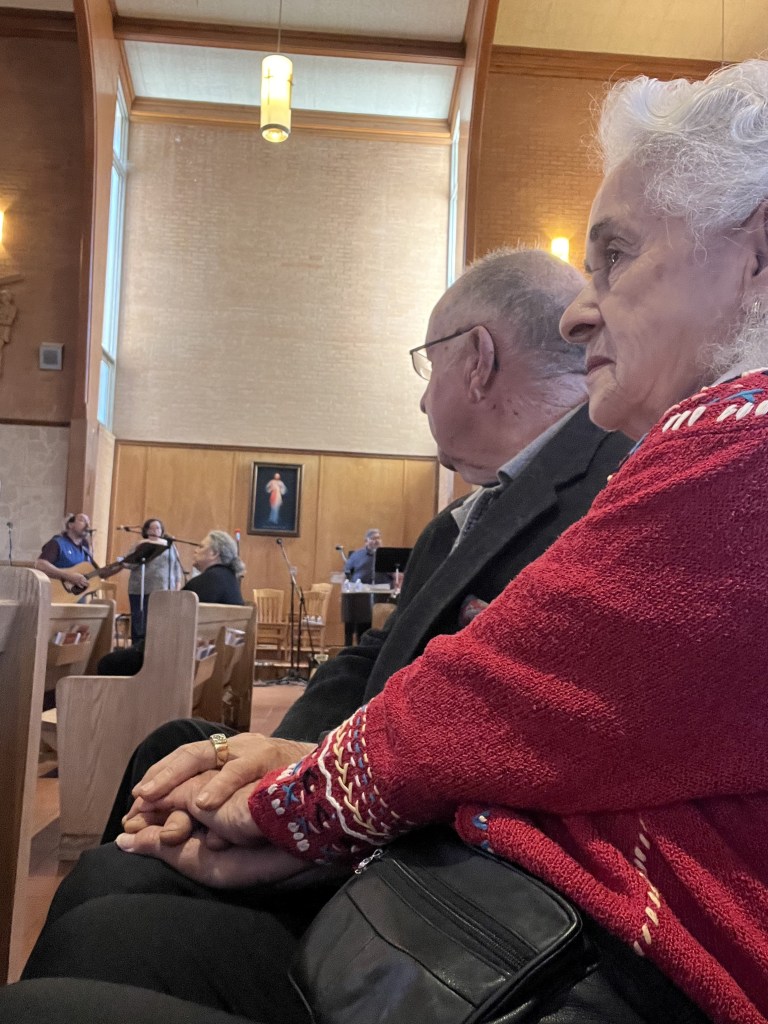
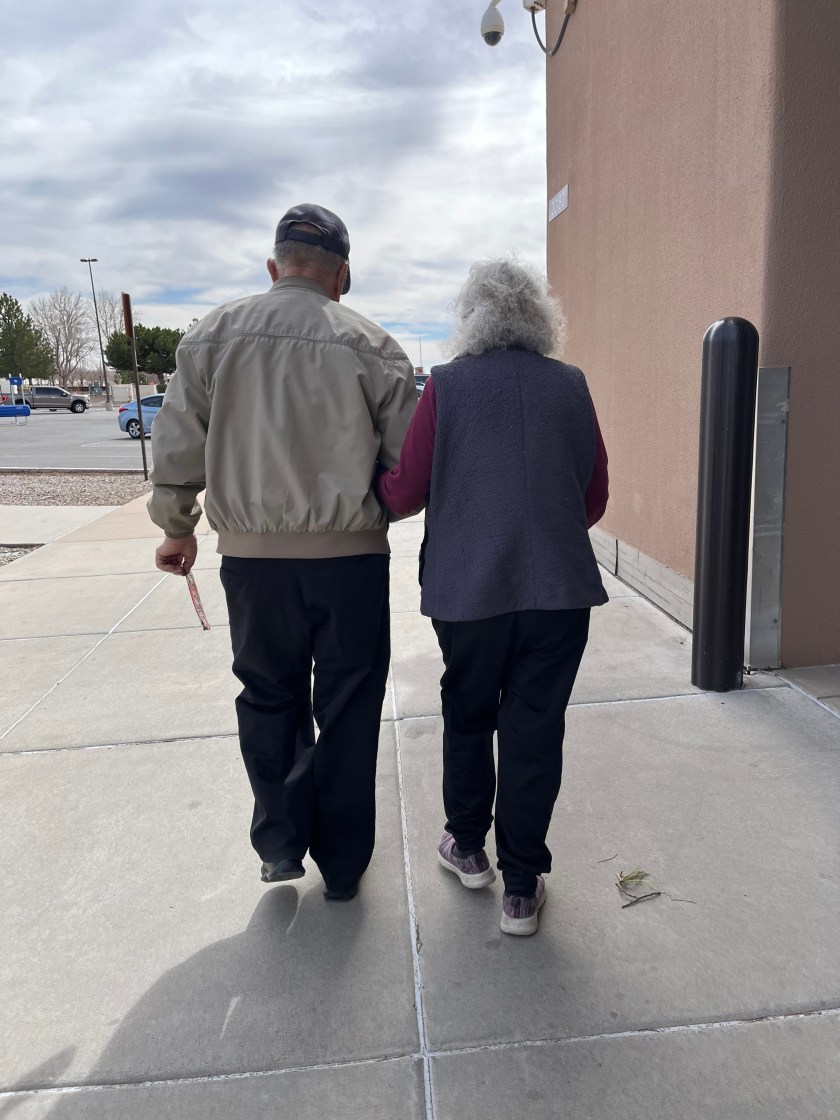
Luckily, Dad starts each morning by saying, “Another good day, right, Mom?!” Mom replies in her realistic tone, placing her coffee in the microwave again, “Okay, Dad”. They do this, call each other “Mom and Dad,” the titles God bestowed on them that they cherish and will use day after day until there are no more days.
During my visit this past week, I wrote down some notes. As they are specific to my parents, I believe the lessons can be applied to taking care of any senior or otherwise. I wrote this list for my sisters, so it may read like a journal, but I thought it might help someone out there.
I strongly believe “everyone needs a destination.”
Respect what I call “the triangle”: Church, the doctor’s office, and the grocery store. These are their familiar stomping grounds – weave in a few other outings (restaurant, casino, a walk), and it gives the day purpose.
Note: If you have to reschedule a doctor’s appointment, do it. Better to take them when they are prepared and feeling okay than stressed and apprehensive.
Listen to their stories – it connects them to a familiar time
My mom’s stories at the age of 14 are formative years and the spotlight of her daily memory.
When Mom talks about giving up the St. John’s College scholarship offer she received, I think about the huge sacrifice she made for her family by working and supporting them when Grandpa was sick.
Mom will remind you of the way grandma and grandpa warmed water on the stove for their baths and how they sang songs like “When the Moon Comes Over the Mountain” in perfect harmony.
Dad will tell you stories in Spanglish as vividly as if you were there.
Speak loudly
Especially if you are reading a crossword clue to dad or the jumble letters, or driving and mom is in the back seat, or telling a story, or or or…
Diet and meals – let them eat cake!
Mom will eat more and digest better if the food is cut into small pieces.
Gatorade powder (more economical per Dad) is rejuvenating. Stir thoroughly or he’ll tell you there is “perfectly good wasted sugar at the bottom of the glass” and refill it.
Happy Hour is sacred; respect it. Open a beer for Dad and poor Mom’s Pedialyte. Place cheese, gluten-free crackers, and fruit on a plate and enjoy.
The “Big” meal is at 3:00 pm.
Dove Bars – we bought eight boxes at the commissary – it’s a highlight of the day…and a fair bribe to get mom to eat.
Outdoor Activities – Emerson said that the happiest person on earth is the one who learns from nature the lessons of worship. So walk outside a lot.
Mom will always have things to show you around the yard, enjoy the tour. Upon my arrival, she said, “Come meet our new family members.” I went out back and was greeted by 24 cranes who began squawking at me as I approached the fence. “If we go to the poor house,” Mom said, “it’s because Dad and your sister keep feeding these guys so much corn”.
Watching Dad move wood from the ground to the truck to the splitter and stack it is as exhausting as doing it yourself.
Dad will work harder than any 20-year-old you’ve ever met and wonder why “me duele de todo” (everything hurts).
Later, talk Dad through why “todo duele” (everything hurts) and gently remind him he is 87 years old and must pace himself.
Indoor Weather – Dress for summer
It will always be warm inside Mom and Dad’s house. Our brilliant sister has the thermostat programmed to plummet to 72 degrees. (Highly Recommend!) To set the thermostat, press the bottom button on the left once, then walk away nonchalantly. Mom will later turn it up to 81 degrees. Once you are drenched in sweat, repeat the process.
The fireplace will be used if the weather is 70 degrees or below.
Indoor Activities –
Mom thinks her hearing is excellent, but according to a hearing test, it’s not. So, before watching Jeopardy, Mom will ask you to “turn up the volume because Dad can’t hear!”
Mom’s filter has gone from almost there to MIA, so when watching Jeopardy, be ready for a roasting of Ken Jennings, who, according to Mom, “acts like he knows everything” …ummm…he did win about a million times.
With Dad’s macular degeneration, he is still able to enjoy and make out the scenery when watching the Alaska shows. “Good hard workers!” he says. He also loves “Nat Geo”, “The History Channel”, and “The Weather Channel”. The more dramatic, the better with the weather.
Puzzles for mom…have one set up and another on deck at all times. This is her quiet space.
The Newspaper
Holding the newspaper in their hands brings comfort, familiarity, and joy. Even if Dad can’t see enough to read it.
Let Mom read the paper to Dad in the morning while he slurps his way through the coffee and pastries or cookies. Tread lightly, this is their time.
When Dad shakes out the newspaper, he’ll say, “Let’s see who’s left and let’s see who moved out of town.” Then he’ll hand me the obituary section to read aloud “slowly”. I announce the names as if they were crossing the stage at a commencement ceremony, or rather, St. Peter’s gate.
The crossword and Jumble are great mental gymnastic exercises and keep their minds active.
Top 10 Do’s and Don’ts
Don’t do laundry. That’s mom’s gig.
If Dad is struggling with something, DO take over and help.
If mom is struggling with something, leave her alone. She “CAN DO IT!”
Don’t move the scissors, pencils, coffee, Kleenex, or blankets. Life is now done by feel and rote memory.
Do agree more.
Do let Dad cheer up Mom. Dad equals levity.
Do help them remember: Dad may not remember what he ate the night before – i.e., “Oh, we ate enchiladas last night? Did I enjoy them?” “Yes, Dad, you loved them.” “Oh, good!”
OR “Did we watch Blue Bloods last night?” Yes, Dad, you fell asleep in the last five minutes. “Did I enjoy it?” Yes, Dad – you loved it.“Oh, good!”
Do answer the phone mean people prey on the elderly.
Don’t ask them, “Do you remember when…” just retell the story.
What I’ve learned:
Being far away is hard. Wondering if this is the phone call is hard, hard, hard. Saying goodbye to them at the airport when I leave is hard…homesickness in my fifties looks a lot different than it used to, and I mentally prep myself for the lifelong homesickness yet to come.
But I love that God and Grace and Mercy exist. I love that when I cry and truly let out my fear of their absence, the tears feel like a Baptism. I love that I have my sisters. How to care for those who cared for us…I love that we are like a pit crew, repairing what is broken, filling up our parents’ tank with all the love we possibly can because we’re on the clock. I love that we take care of each other.
Thanks for joining me,
Lucretia
On writing…
“You are going to feel like hell if you never write the stuff that is tugging on the sleeves in your heart–your stories, visions, memories, songs: your truth, your version of things, in your voice. That is really all you have to offer us, and it’s why you were born.”
Caregiving is both a blessing and a challenge. Between my sisters and me, we manage our parents’ care. I’ve mentioned before that I live the furthest away, so I carry less of the load. Recently, I have been coming more on weekends to help out and have learned that just as I’m preparing to leave, I finally grasp the tips and tricks that make the day easier.
Things like:
Be direct – Answer questions and don’t overexplain: the more complex the answer, the more confusion ensues.
Give hope – Say yes to requests and ideas…if Mom thinks she’s going to recover the chairs in the kitchen, say YES, we can go to the fabric store.
Stay calm – Calm begets calm
Emphathize – Amid the moans and groans from aging and exhaustion from working outside, grab the heating pad, warm some tea, and use Aspercreme.
Nourish – Never underestimate the power of Cheerios any time of day for Mom and a peanut butter sandwich for Dad.
Go outside – Take a walk, sit in the shade, look up at the sky, and take notice.
Laugh – Mom is amazing at laughing at herself, even if she puts her shirt on backwards or, this morning, her bra. She says, “You could write a story about this and call it Idiot’s Delight.”
Let them – let them do as much as they can on their own. Independence is priceless.
Love them – Remember you are still their child,d and they need your love even more than they need you to help put in their partials (teeth). Although both are very important.
Listen – You’ve heard the stories a million times; let them tell it again.
What I learned:
I’m lucky to have my parents and my sisters, and I pray I have the same positivity as I grow older, even if I put my bra on backward someday.
For me, openly sharing my thoughts in a public forum is weighty. Perhaps it is because I hear my mom’s voice telling me and my sisters, “Be careful what you write down…followed by “and always pay your debts.” The former is what I hear when blogging, and the latter rings in my ears the rest of the day. Respecting Mom’s words, I take heed and trudge forward.
When I began sharing my writing with whomever would read it, I was conscious of the vulnerability clinging to every word. I knew it was a powerful way to connect with others, so I kept writing.
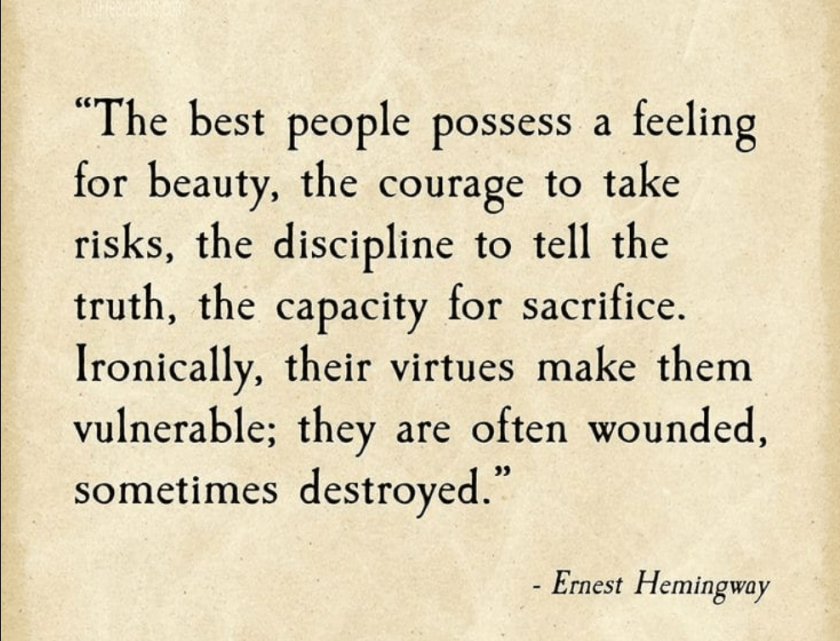
Then, while at my son’s baseball game a few years ago, I thought about this vulnerability and how it plays a sneaky James Bond role in all of our lives.
That sunny day, I sat next to a mom whose son was called up to pitch. As he stepped onto the mound, she turned to the parents in the stands and affirmed in her outside voice, “My son has only pitched ONCE IN HIS LIFE, so I don’t know what’s going to happen!” I assured her we would not judge her or her son. Plus, now we knew he was hers, so we were bound to keep it positive. She continued as most parents would, by hollering, “Just have fun out there, son, and smile!!!” Roughly translated: don’t get hurt, and please, for the love of all that is holy, throw strikes. (Thankfully, there’s an unheralded empathy for parents who watch their child stand in any goal or dig their cleats into the rubber on a pitcher’s mound. Every parent inherently knows to cheer them on (the kids and the parents).
To be honest, when I started blogging, I kind of wanted my mom to also stand up and yell to the world,
“My daughter has only blogged ONCE IN HER LIFE, so I don’t know what is going to happen!”
She didn’t yell it, but she did encourage me to continue writing stories…and to pay off any debts “even if it is only a nickel!”
What I learned:
“Write straight into the emotional center of things.Write toward vulnerability.Risk being unliked.” – Anne Lamott






 runonmom.com