
Lenten Reflections #9
In family life, love is the oil that eases friction, the cement that binds closer together, and the music that brings harmony.
-Friedrich Nietzsche

Lenten Reflections #9
In family life, love is the oil that eases friction, the cement that binds closer together, and the music that brings harmony.
-Friedrich Nietzsche
Day #7
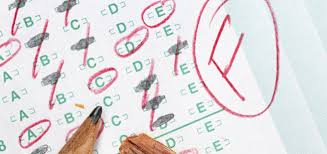
Some parents regard any failure by their children as a crisis. James Lehman, MSW with Empoweringparents.com said,
“In a crisis, parents see the danger part very clearly, but often don’t see the opportunity part. They don’t see that their child has the opportunity to learn an important lesson. The lesson might be about the true cost of cutting corners, what happens when he doesn’t do his best at something, or what the real consequences are for not being productive.”
Typically teachers give students tools and strategies to study for tests, but there are those kids who think their teachers should hand deliver the said study guide to their home, place it on the kitchen table, and maybe even complete it for them.
Trust me, under the crumpled paper, broken pencils, and PE clothes in their backpack lie a study guide.
To be executed correctly, this excuse should be said with backbone. Stress on the word EVERYONE while holding onto evvvvvvv——eryone should help their case. Teenager’s pre-frontal cortex has convinced them that if the masses failed, it clearly wasn’t their fault.
Maybe the class is full of slackers or maybe, well, nevermind.
This excuse is usually coupled with “There’s only one grade in the grade book, so that’s why it seems like such a bad grade.”
Nope. It’s actually a bad grade.
Helping students develop good study habits is insanely hard. Teaching them to prioritize and manage their time is even worse. Ultimately it’s up to them what they study for first if at all, but if this is their excuse, make your follow-up the classic:
“Well, you should have started studying earlier.”
Once your kids get into the harder subjects, like AP Calculus and Physics, using the ignorance of the teachers bodes well as an excuse and is surprisingly convincing…I mean the reason for not doing well is coming from a child who qualified to be in the class, so…
NOPE! Don’t fall for it! They should have studied.
This is my son’s favorite. It’s the moment when parents have two choices: admit their child did not study enough or at all; or worry they don’t understand any of the content and cancel the family’s summer vacation.

Every morning, nestled under coffee cups and bowls of Cheerios lies the Albuquerque Journal spread across the large table (which once sat six) as if poised for a large art project. Dad takes the front page, Mom pores over the local news, and they both rotely read through the obituaries. Then Mom starts “the puzzle” as they call it. She nearly completes her half of the daily crossword effortlessly (depending on the day) and passes it to Dad. Inevitably they finish it together.
Crossword puzzles, jokes, riddles, and intermittent episodes of Jeopardy are a huge part of my parent’s lives.
According to wordwealth.com,
“When it comes to senior people, the daily crossword puzzle is a game-changer. The benefits of solving puzzles for the elderly are innumerable, including enhanced memory, better cognitive skills, improved concentration, and much more. It can even reduce the chances of dementia and Alzheimer’s in the elderly.”
Mom and Dad are no exception to this rule. So when my sister sent the above picture of our parents with a beautiful puzzle they had recently finished, I had to share it with you all. The text attached, read “FINISHED!” Yet another successful puzzle solved and completed by Mom and Dad.
These jigsaw cardboard conundrums remind us to take time to sit and search for the tangible corner pieces, edges and crazy pieces we try so hard to force-fit into a spot, but also, help us to weed through our own lives and piece together who we are, what we are destined to do, and how we can gracefully arrive where we belong.
Thank you kindly for reading.
Lenten Reflections #5
Today is the official holiday to celebrate the birthday of the beloved, Theodor Seuss Geisel – best known as Dr. Seuss. In 1998, in an effort to celebrate, the National Education Association advocated for a day to celebrate reading all over the United States. In 1998, it started Read Across America and decided to hold it on the same day as Dr. Seuss’ birthday.
As I read about wockets in pockets, Sam-I-Am’s finicky taste in breakfast foods and the Cat in the Hat’s rainy day, I marveled at how engaged the first graders were.
“It just doesn’t make sense…they’re not real words!” said one strong-voiced girl.
“His books don’t have to make sense!” said a giggly guy, “that’s why they are so funny!”
I thought about this exchange while I went on a short run this afternoon.
I pondered how life can easily parallel any Dr. Seuss book. From the flat out refusal to try new things like stubborn Sam-I-Am and those green eggs — to exaggerating the minutia and “turning minnows into whales” like on Mulberry Street. Too often we forget to take chances and just pile all those Apples Up on Top and if they must, just watch them drop.
Dr. Seuss had a deep respect for his readers, saying,
“I don’t write for children, I write for people. Once a writer starts talking down to kids, he’s lost. Kids can pick up on that kind of thing.”
So if you rest your head in Whoville or Wisconsin, let your heart grow three sizes and love your neighbor.
 runonmom.com